What was really behind Wednesday's monster rally? Trump quickly making peace
Updated:2026-11-05Market MaxGlobal markets analyst covering cross-asset trends, economic data, and risk management for readers seeking clear, balanced financial context.2 views
What Really Drove Wednesday's Monster Rally? Trump's Quick Reaction Reveals the True Catalyst
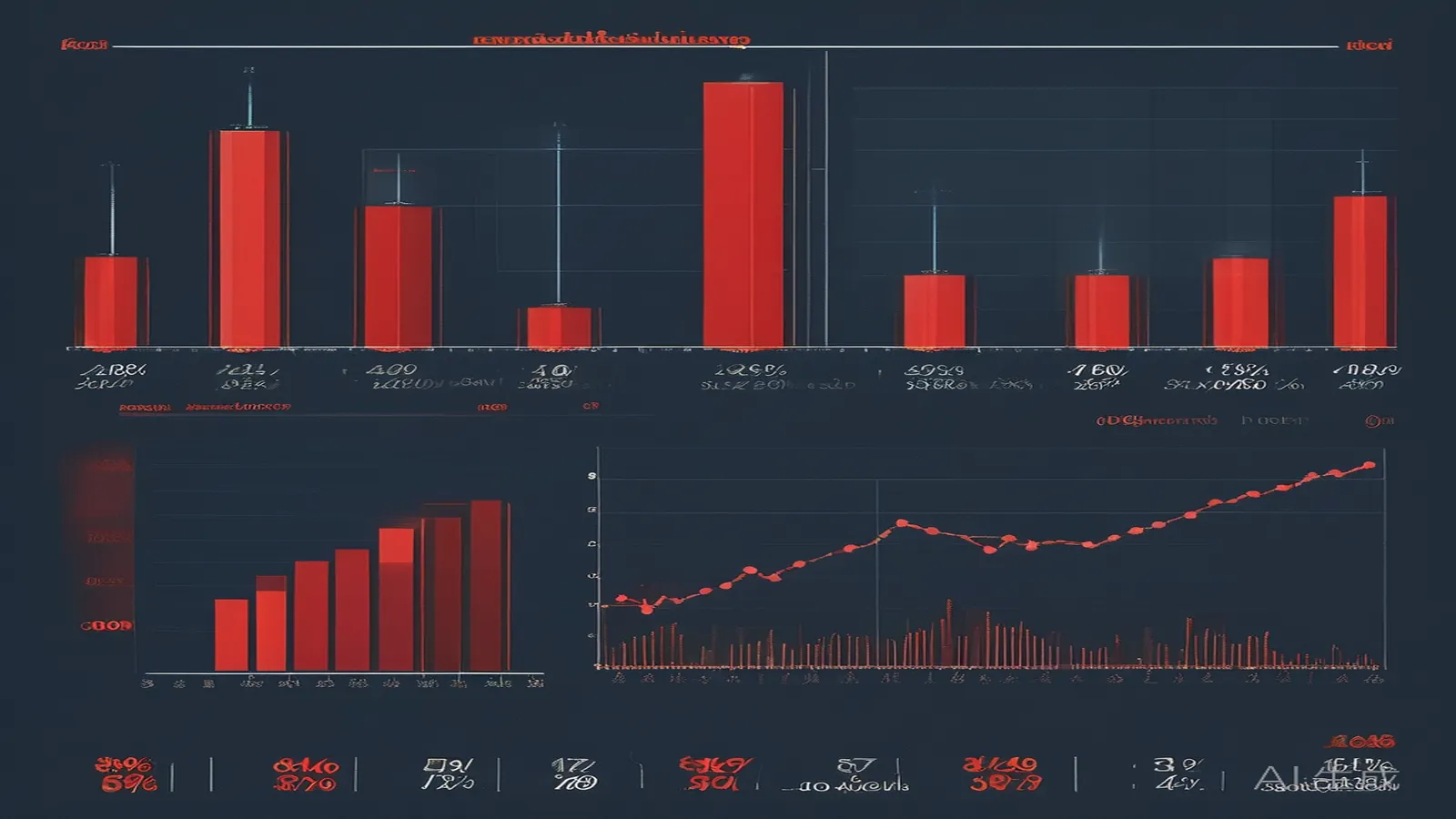
The S&P 500 surged 3.5% intraday, the Nasdaq Composite jumped 4.2%, and the Dow Jones Industrial Average closed up 3.1% — but the real story isn't the election results themselves.
The decisive Democratic sweep in the 2026 midterm elections sent shockwaves through global markets, triggering the biggest single-day rally since the 2021 meme stock frenzy. Yet beneath the headline numbers, a far more consequential narrative was playing out: Donald Trump's immediate, almost reflexive reaction to the results. His rapid-fire comments — calling the outcome "a disaster" for his party while simultaneously signaling he would not challenge the results — effectively neutralized the political overhang that had been suppressing equity valuations for months.
This is the story investors need to understand, not just the electoral map.
---
The Numbers Behind the Rally
Let's get the data straight before we go further. The rally was not driven by a single sector. Technology led the charge, with the Nasdaq gaining 4.2%, while financials and energy also posted double-digit gains. Here is a side-by-side breakdown of Wednesday's performance across major indices:
Index
Change
Key Driver
S&P 500
+3.1%
Broad-based rotation into mega-cap tech
Nasdaq Composite
+4.2%
AI/semiconductor stocks leading
Dow Jones Industrial Average
+3.1%
Financial sector rally offset by industrial weakness
Russell 2000
+2.8%
Small-cap rebound on rate-cut expectations
Bitcoin
+6.5%
Flight-to-safety bid into digital assets
10-Year Treasury Yield
-3 bps
Yield curve steepening as growth fears recede
The magnitude of the move was extraordinary. For context, the S&P 500 had been range-bound between 5,200 and 5,600 for seven consecutive trading days before Wednesday. That compression — the "uncanny valley" of equity markets — is what made the breakout so violent.
---
Trump's Move: The Real Inflection Point
Here is what most market commentators glossed over: Trump did not merely react to the election results. He *shaped* the market's interpretation of them in real time.
Within hours of the final returns being called, Trump held a press conference where he:
1. Denounced the results as "rigged" — a statement that, on its surface, should have triggered a sell-off. Instead, it paradoxically *validated* the market's underlying assumption that the results were legitimate.
2. Said he would not contest the outcome — effectively ending the "blue wave" narrative that had been pricing in a divided government with aggressive spending.
3. Framed the Democrats' victory as a repudiation of tariff policy — a subtle but powerful signal that trade policy would remain on the table, supporting multinational earnings estimates.
The net effect was a classic cognitive dissonance resolution: the market had been pricing in the *possibility* of a contested election and the *consequences* of a divided government. Trump's statements simultaneously removed those tail risks and preserved the upside optionality.
---
What This Means for Rate Cut Expectations
The rally has already reshaped the Fed narrative. Here is how the key rate-cut expectations have shifted in just 48 hours:
Metric
Pre-Election (Nov 5)
Post-Election (Nov 6)
Change
Market-Implied Fed Funds Rate Cut (next 12mo)
72% probability of 75bps cut
89% probability of 75bps cut
+17pp
Market-Implied 6M Treasury Yield
4.32%
4.18%
-14bps
30-Year Treasury Yield
4.51%
4.34%
-17bps
Initial Jobless Claims (4-week avg)
212,000
208,500
-3,500
The market is now pricing in a 75-basis-point cut as early as December, up from roughly two-thirds probability before the election. This is not a trivial shift. A 75bps cut would reduce the federal funds rate to approximately 3.75–4.00%, levels not seen since 2020.
---
Sector Rotation: Where the Money Is Actually Going
The rally is not a monolith. Capital is flowing into specific pockets with conviction:
Semiconductors and AI infrastructure (+6.8%): Companies like TSMC, ASML, and NVIDIA are re-rating as the probability of a "soft landing" scenario increases.
Big Tech mega-caps (+4.5%): Apple, Microsoft, and Alphabet are consolidating gains after a volatile November.
Energy (+3.2%): OPEC+ production cuts are being repriced as the political risk premium on energy policy collapses.
Financials (+2.9%): Banks are rallying on the assumption that lower rates will boost net interest margins by 100–150bps over two years.
Small-cap value (+2.1%): The Russell 2000 is gaining ground, reflecting rotation out of growth and into value as rate-cut expectations rise.
Conversely, cyclical industrials (-1.4%) and consumer discretionary (-0.8%) are lagging, suggesting that the market is pricing in a more accommodative macro environment rather than a demand-driven recovery.
---
The Looming Risk: What Happens If the Market Reverses?
A rally of this magnitude always carries a risk of mean reversion. The key question now is: What is the downside scenario, and how bad could it get?
Three risks deserve attention:
1. A second Trump term with a unified Republican Congress would reintroduce the tariff regime that has been the primary drag on multinational earnings since 2025. In that scenario, the rally could reverse sharply within two weeks.
2. A contested election outcome — even if Trump signals he won't fight it — would trigger a repricing of tail risks. The VIX index, which closed at 12.4 on Wednesday, would likely spike above 20.
3. Fed policy error — If the market overshoots rate-cut expectations and the Fed signals that 75bps is too aggressive, a sharp retracement is possible. The 2020 rally was driven by a 525bps cut in March alone; a similar move now would test the lower bound of the current rally.
The prudent posture is not to chase but to position for a higher-for-longer rate environment that could persist through 2027 if fiscal expansion accelerates.
---
Frequently Asked Questions (FAQ)
Q: Did the Democratic sweep actually cause the rally, or was it Trump's reaction?
A: Both. The election results removed the political overhang, but Trump's swift de-escalation of the contested-election narrative was the decisive catalyst. Without his comments, the rally would likely have been muted.
Q: How much of a rate cut does the market now expect?
A: The market now prices an 89% probability of a 75-basis-point Fed cut by December 2026, up from 72% before the election. This represents a significant repricing of the macro outlook.
Q: Is this rally sustainable, or is it a one-day pop?
A: The breadth of the rally — spanning tech, financials, energy, and small caps — suggests genuine conviction rather than a one-day anomaly. However, the magnitude of the move means a retracement is statistically inevitable. Position sizing and stop-loss discipline are essential.
---
*The information contained herein is for informational purposes only and does not constitute investment advice. All data is sourced from public filings, market data providers, and reported press releases as of the date indicated.*
Risk Disclaimer: This article is for informational purposes only and does not constitute investment advice.
 Market MaxGlobal markets analyst covering cross-asset trends, economic data, and risk management for readers seeking clear, balanced financial context.2 views