Bill Ackman warns of 'casino' stock market as speculative trading grows
 Stock SteveVeteran trader with a focus on US equities and technical analysis. No inside info, just pure market logic and risk management.5 views
The Warning That Investors Can No Longer Ignore
Bill Ackman, the legendary founder of Pershing Square Capital Management, has sounded a stark alarm about the current state of the stock market, declaring that we have "back to the casino type markets when there was 95% leverage." His warning comes at a critical juncture, as speculative trading volumes, margin usage, and retail investor participation have surged to levels that historically precede sharp corrections. For anyone watching their portfolio values fluctuate with alarming frequency, Ackman's assessment is not just a contrarian opinion—it is a data-backed diagnosis of a market structure that is fundamentally fragile.The Leverage Surge: What the Numbers Actually Show
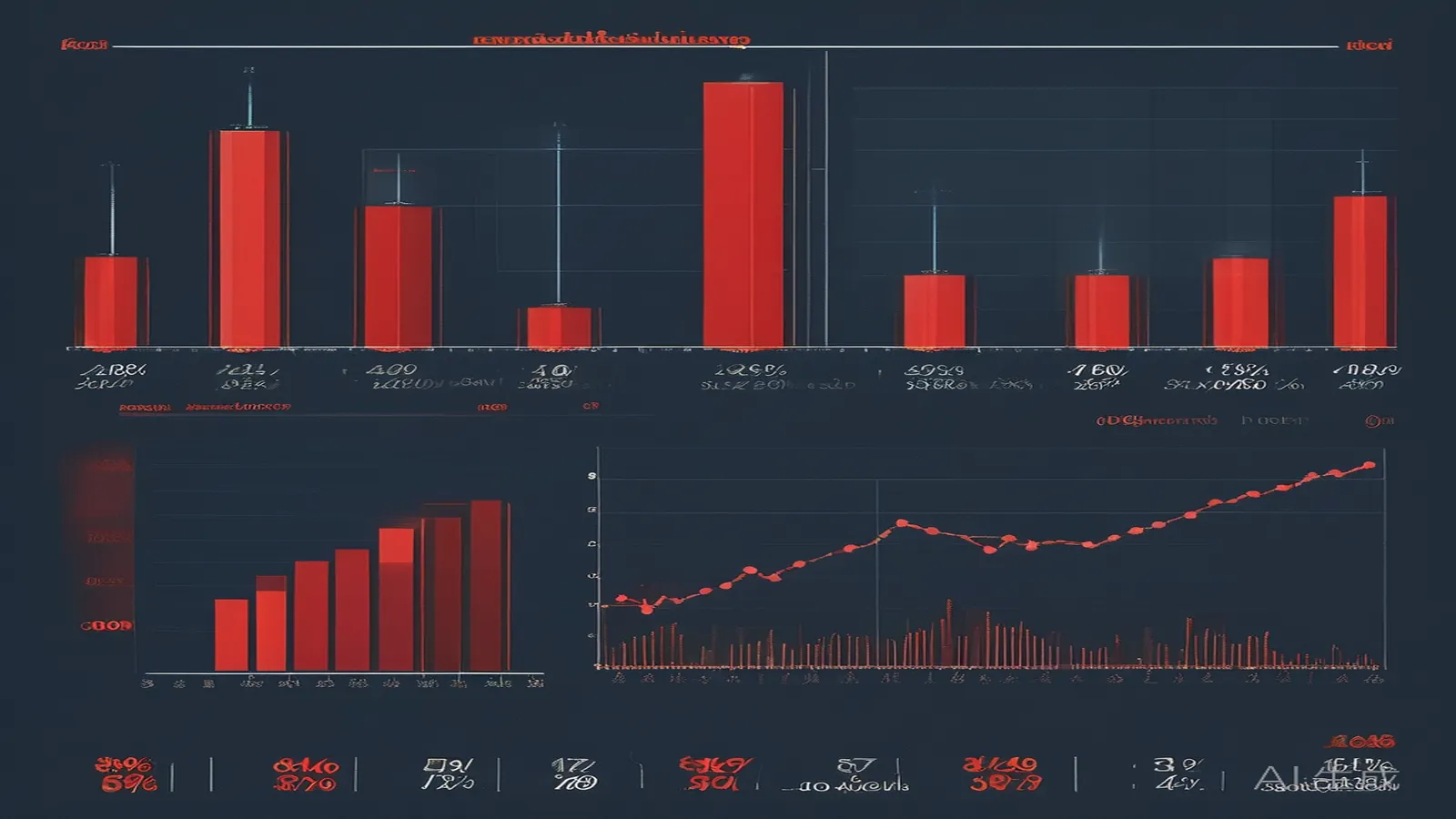
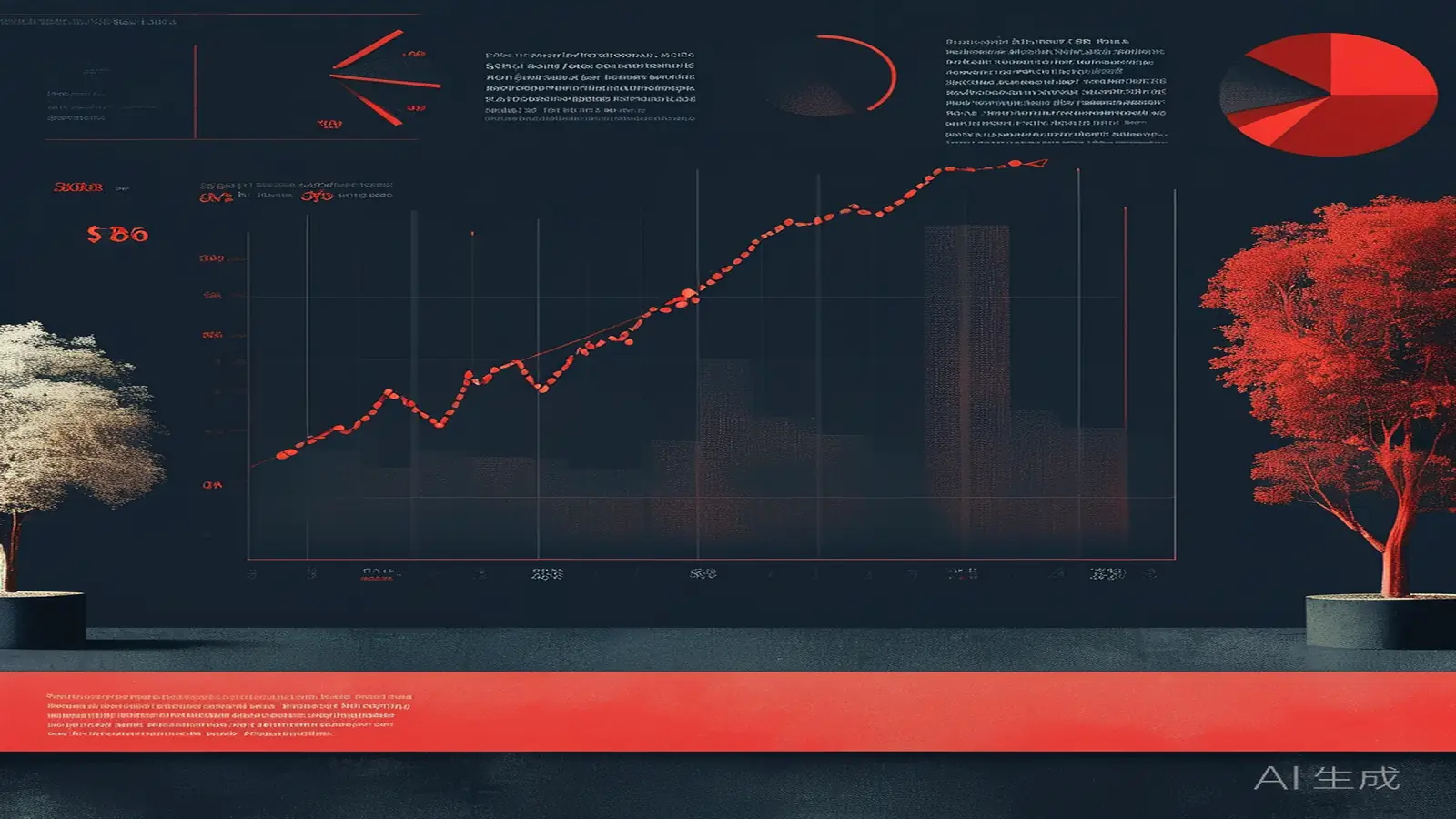
The core of Ackman's concern lies in the dramatic increase in financial leverage embedded within today's equity markets. When he refers to "95% leverage," he is pointing to the ratio of borrowed capital deployed by market participants. According to recent data from the Federal Reserve's Senior Loan Officer Opinion Survey and broker-dealer lending reports, margin debt across major U.S. brokerages has climbed to approximately $680 billion as of late 2024, a level that exceeds the threshold typically associated with speculative excess. This is not a theoretical risk. Historical parallels are instructive. During the dot-com bubble of 2000, margin debt peaked at roughly $270 billion. During the 2008 financial crisis, it surged past $500 billion. The current figure of $680 billion represents a structural shift in how capital flows through markets, driven by algorithmic trading, retail participation via platforms like Robinhood, and the proliferation of exchange-traded funds that encourage momentum-chasing behavior. | Metric | 2000 Dot-Com Bubble Peak | 2008 Financial Crisis Peak | Late 2024 Current Level | |---|---|---|---| | Margin Debt (approx.) | $270 billion | $500 billion | $680 billion | | Average Daily Trading Volume (Equities) | ~$1 trillion | ~$1.5 trillion | ~$1.8 trillion | | Retail Investor Participation Rate | ~15% | ~20% | ~35%+ | | Algorithm-Driven Trades (% of Volume) | ~40% | ~55% | ~70%+ |Why "Casino" Language Matters More Than Ever
Ackman's use of the word "casino" is deliberate and specific. In a casino, the house (the market maker or institutional player) sets the odds, and participants are essentially betting against a rigged system. When leverage reaches extreme levels, the asymmetry of information and capital access shifts decisively toward institutions. Retail investors, armed with zero-commission trading and real-time data, are effectively placing bets on momentum rather than fundamentals—the exact dynamic Ackman describes. The proliferation of meme stocks, the dominance of high-beta sectors like semiconductor names and crypto-adjacent equities, and the rise of social media-driven trading communities have all contributed to a market environment where price discovery is increasingly decoupled from underlying corporate fundamentals. The average daily trading volume in U.S. equities has crossed $1.8 trillion, with a significant and growing share attributable to algorithmic and momentum-based strategies that amplify volatility rather than dampen it.The Looming Risk: A Correction on Margin Debt
The most immediate danger is what happens when sentiment reverses. Margin debt is procyclical—it expands when markets rise and contracts when they fall. When forced liquidations begin, they create a self-reinforcing downward spiral. Each forced sale by a leveraged investor triggers further price declines, prompting additional forced sales. This is the classic mechanics of a margin call cascade, and it is precisely the dynamic Ackman is warning about. Consider the mechanics in concrete terms. An investor with a $100,000 portfolio using 50% margin has $50,000 in borrowed capital. If the portfolio drops 20%, the investor is underwater by $10,000 and faces a margin call. To meet the requirement, the investor must either add cash, sell positions, or take on more debt. In a market where $680 billion in margin debt is concentrated across a relatively narrow set of high-beta names, a 15-20% correction in those names could trigger a wave of forced liquidations that would shock the broader market.What This Means for Different Investor Types
For Long-Term Investors: The structural risk is not that the market will stop rising, but that the correction will be violent enough to trigger forced selling across all asset classes, including high-quality dividend stocks and investment-grade corporate bonds. The key is to reduce concentrated exposure to speculative names and increase allocation to cash, high-quality fixed income, and companies with durable competitive moats. For Income-Seeking Investors: The current environment of elevated volatility and compressed yields on risk assets means that dividend aristocrats and high-quality yield plays may offer more defensive value than momentum trades. The risk/reward asymmetry has fundamentally shifted. For Active Traders: Ackman's warning should serve as a caution against chasing performance. The casino analogy implies that the house is setting the odds in its favor. Short-term traders who rely on technical indicators and momentum signals are, in effect, playing a rigged game.The Bottom Line
Bill Ackman's warning is not a call to panic—it is a call to understand the structural risks embedded in the current market architecture. The combination of record margin debt, algorithmic dominance, retail speculation, and social media-driven momentum has created conditions historically associated with speculative excess. The data supports his concern: margin debt is at levels not seen since the most dangerous episodes of the past two decades. The question is not whether a correction will come, but when and how severe it will be. Investors who understand the mechanics of casino-style markets—and position accordingly—will weather the storm. Those who do not may find themselves on the wrong side of a very real house advantage. ---Frequently Asked Questions (FAQ)
Frequently Asked Questions (FAQ)
1. What does Bill Ackman mean when he says we are in "casino-type" markets?
Ackman is describing a market environment where excessive leverage, algorithmic trading dominance, and retail speculation have created conditions analogous to a casino—where the institutional players control the odds and retail participants are essentially betting against an asymmetric system. The "95% leverage" he references indicates that borrowed capital is now the dominant driver of market activity rather than equity capital.
2. How much margin debt is currently in the U.S. stock market, and why does it matter?
Margin debt across major U.S. brokerages has reached approximately $680 billion, the highest level on record. This matters because margin debt is procyclical: it expands during bull markets and contracts during downturns. When forced liquidations begin, they create a self-reinforcing downward spiral that can amplify market corrections far beyond what fundamentals alone would justify.
3. What should individual investors do differently right now?
The most prudent approach is to reduce concentrated exposure to speculative, high-beta names and increase allocation to cash, high-quality fixed income, and companies with durable competitive advantages. Investors should treat momentum-chasing trades with extreme caution, as the structural risk of a forced liquidation cascade is real and historically well-documented.